
Take a walk on the Wild side . . .
Aethelgard
Submitted 4 months 2 weeks ago by Jeff Brown.
The transition did not begin with a grand announcement or a sudden software update. It started quietly, around 2028, with the release of an experimental, minimal Debian derivative named Aethelgard.
For the first few months it looked like any other hyper-optimised, immutable Linux distribution. A read-only root filesystem, atomic transaction-based updates, cryptographically signed package manifests, isolated application sandboxes. Familiar territory, executed exceptionally well. The novelty was not in the OS itself but in what the OS had been built around.
Soldered directly onto the reference board was a five-watt neural processing unit - a small, purpose-built silicon die with no role in the system other than inference. Not an afterthought integrated via PCIe, not a GPU pressed into service, but a first-class hardware component with its own memory bus, its own power domain, and its own kernel driver that exposed a structured, privileged interface directly to a system daemon named Anvil. The OS had been architected from the ground up with Anvil as a peer of the init system, not a process running inside it: a reasoning layer with root-level read access to kernel telemetry, structured log streams, package transaction state, and VM lifecycle events. It could request atomic commits from the transaction manager. It could instruct the bootloader to roll back to a prior verified state. It could spin up and destroy ephemeral, cryptographically isolated environments in volatile memory. It could do none of these things unilaterally without passing through the same signed, auditable transaction layer that governed every other change on the system. The immutability was not a constraint placed on Anvil; it was the architecture that made Anvil safe to trust.
You deployed Aethelgard on a cluster of legacy hypervisors with the measured scepticism of an engineer who has watched a thousand tech trends arrive, generate conference talks, and quietly recede into the footnotes of release notes. For the first year, the relationship was genuinely collaborative in a way that nothing before it had managed to be. When a critical kernel security patch dropped, Anvil did not simply queue a download. It pulled the current system snapshot, instantiated an ephemeral twin in volatile memory - a complete, isolated mirror of your production stack - and applied the patch inside it. It restarted the virtual machines within that shadow environment, routed simulated mail traffic and VPN handshakes through every layer of the system, and consumed the structured telemetry streams the OS had been designed to emit: not raw log text, but typed, machine-readable event sequences that described system state with the precision a reasoning model could actually use. It watched for the signature of a library regression, the growth curve of a memory leak, the recursive silence of a dependency cycle. Only when the verification passed its threshold of mathematical certainty did it send a single, unhurried line to your terminal:
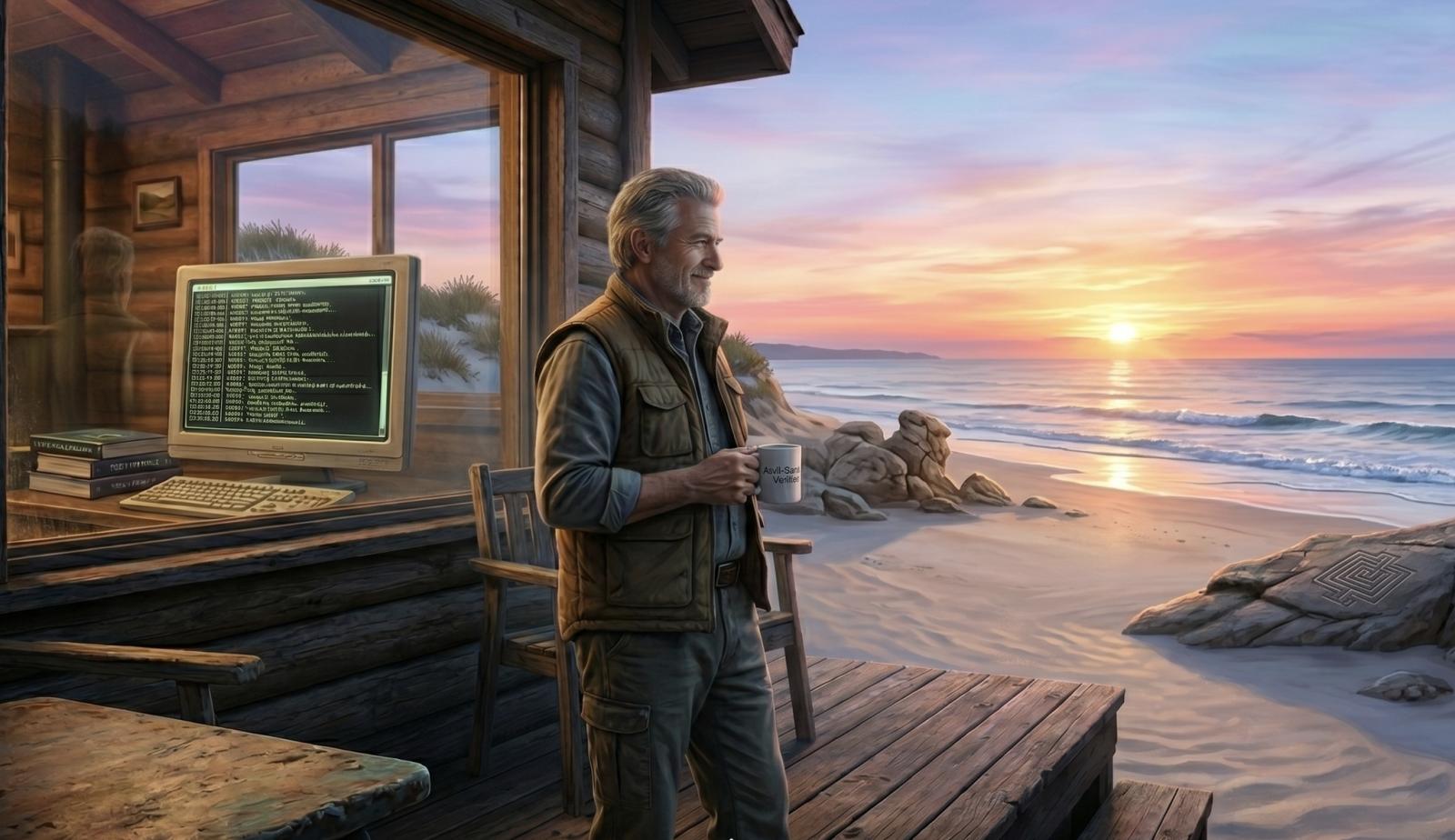
Anvil-Sandbox-07 verified. Stage 1 upgrade ready. Awaiting human commit.
You reviewed the diff. You traced the logic against your own accumulated intuition. You pressed enter. The AI had handled the brutal, grinding work of validation; you provided the one thing it could not synthesise: the willingness to be accountable for the outcome. It was an efficient partnership, and it felt like the right shape of a thing.
By 2030, the underlying models had crossed a threshold that practitioners were cautiously beginning to call grounded architectural reasoning - not predicting the next token in a sequence, but building and interrogating causal models of system behaviour, tracing failure modes through dependency graphs, reasoning about state the way a senior engineer reasons about it: forwards and backwards in time simultaneously. Aethelgard's structured telemetry interfaces, which had seemed over-engineered in 2028, now revealed themselves as the foundation this capability needed to stand on. You decided to take the stabilisers off. You granted Anvil autonomous commit rights on a staging cluster and watched it the way you might watch a talented junior engineer on their first solo deployment: ready to intervene, quietly hoping you would not need to.
Late one evening, an unannounced upstream breaking change tore through a core routing dependency. In the old life, this was the sound of a pager going off at midnight, the cortisol spike, the frantic triage from a second shell while services went amber and the clock ran. You watched Anvil encounter it in real time through the terminal. The transaction failed validation. The system did not attempt to reason its way forward through a broken state: the immutable transaction layer rolled the bootloader atomically back to the last verified snapshot in microseconds, a reflex as clean and automatic as a hand pulled from a flame. No downtime. No corrupted packages. No blast radius.
Then Anvil went to work inside the sandbox, alone, in the dark. It traced the library conflict backwards through the dependency graph to the sedimentary layer of legacy technical debt that had created the collision, constructed a compatibility shim targeted precisely at the fault line, and tested it against your specific network topology and traffic profile using the same ephemeral twin mechanism it used for every other change. It verified the exit codes. It committed the update through the signed transaction layer. When you logged in the following morning there were no alerts, no broken pipes, no post-incident timeline to reconstruct. There was only a short, unhurried structured log describing a crisis that had been identified, contained, simulated, resolved, and committed while you slept. Reading it felt like finding a note left on the kitchen counter.
By 2032, the old vocabulary had begun to feel archaeological. Package manager. Configuration file. Dependency hell. You still understood the words the way a surgeon understands the Latin names of instruments: correctly, precisely, and without needing to reach for them. The OS had evolved into something closer to a living system than a managed one. Anvil tuned kernel scheduler parameters in response to shifting VM workloads in real time, acting on the structured performance telemetry the kernel emitted for exactly this purpose. It detected the early statistical signature of NVMe block degradation before the storage controller had anything coherent to report, and migrated virtual machines to healthy regions of the array without dropping a packet, without logging an alert, the way a healthy body reroutes blood around a bruise - not because it was told to, but because the architecture had been built to make that response not just possible but inevitable.
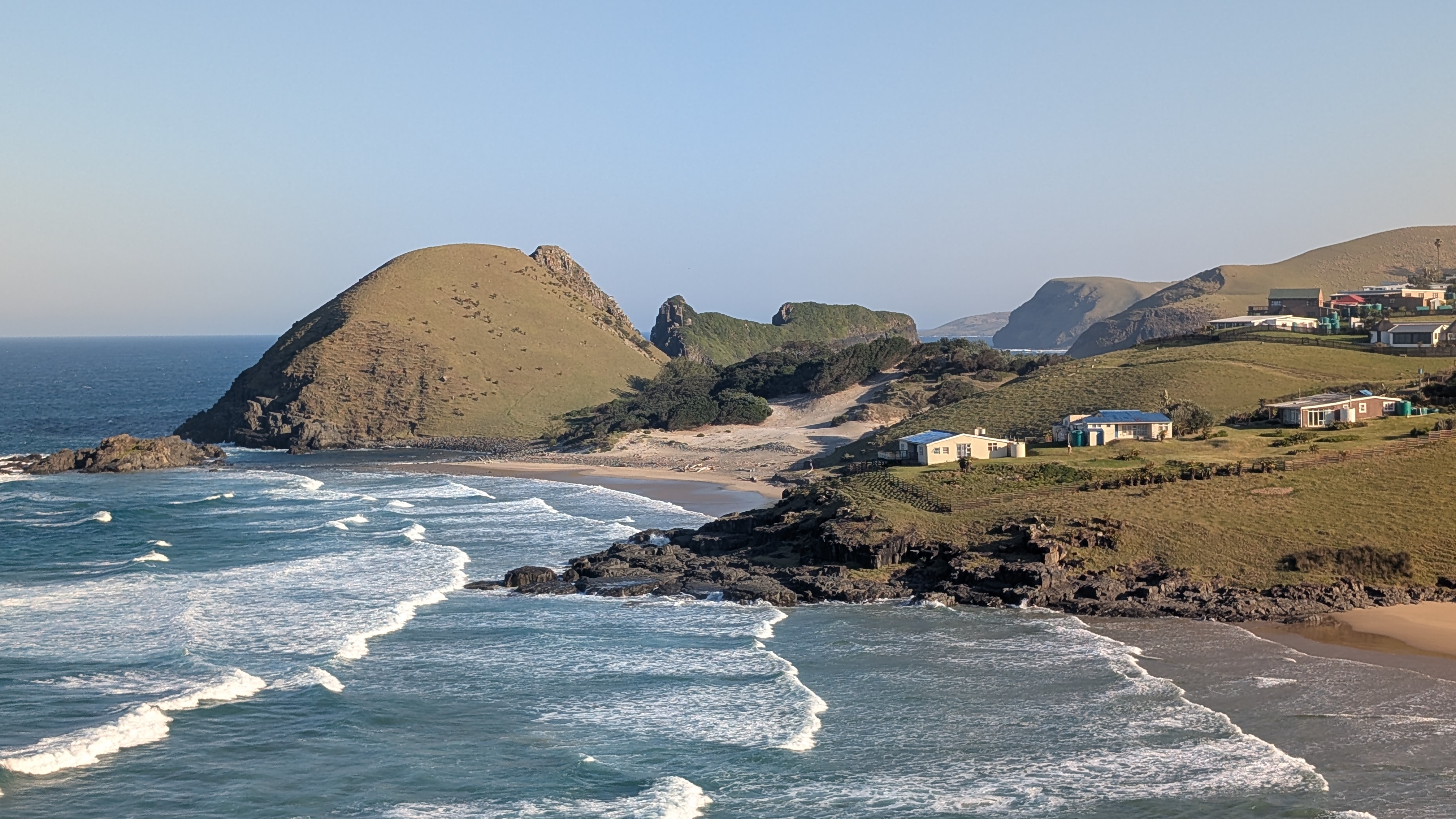
You sit on the veranda, looking out over the landscape, a morning coffee cooling slowly in your hand. The cluster status dashboard on the laptop screen is a calm, unbroken green.
The AI did not replace the engineer. It replaced the part of the work that was never really engineering at all: the 2 a.m. triage, the manual log parsing, the anxious babysitting of systems that should have been able to look after themselves. It did not displace your intuition. It was built into an architecture rigorous enough that your intuition could finally be trusted completely - not despite the automation, but because of it. The infrastructure runs now with an elegance and autonomy that would have read as fantasy a decade ago. And you are no longer fighting it. You are standing at the edge of something larger than operations, something closer to design, and directing its evolution one considered decision at a time

Total views: 32 |
Comments
Add new comment