Jeff Brown's blog

Jeff Brown's blog: Geek

I received 2 XO laptops for development purposes on Friday. What an amazing marvel of technology and Open Source philosophy! Huge respect to the visionaries responsible for this wonderful educational tool (Nicholas Negroponte, Mary Lou Jepsen, Walter Bender, and many others). Actually it looks like a Fisher Price toy, but it's really a full featured Linux based computer.

Digital technology has made it easy to create new works from existing art, but copyright law has yet to catch up.

http://online.wsj.com/article/SB122367645363324303.html

By LAWRENCE LESSIG

In early February 2007, Stephanie Lenz's 13-month-old son started dancing. Pushing a walker across her kitchen floor, Holden Lenz started moving to the distinctive beat of a song by Prince, "Let's Go Crazy." He had heard the song before. The beat had obviously stuck. So when Holden heard the song again, he did what any sensible 13-month-old would do -- he accepted Prince's invitation and went "crazy" to the beat. Holden's mom grabbed her camcorder and, for 29 seconds, captured the priceless image of Holden dancing, with the barely discernible Prince playing on a CD player somewhere in the background.

Valerie Sinclair

I came across this link on the OLPC wiki. It's a really cool Java applet that illustrates from the edge of the universe to the surface of a proton. Check it out: http://micro.magnet.fsu.edu/primer/java/scienceopticsu/powersof10/

Click on these amazing photos to go to the Florida State Uni's Micro Magnet website.

Personally I think the ampicillin photo is the most awesome 3 dimensional abstract art I've ever seen. Look closely. It's like looking through a stereograph.

"South African Finance Minister Trevor Manuel welcomed the project when speaking at a conference in Germany.

"The information gap is very real and clearly whatever we can do to close it must be encouraged," Manuel told a news conference in Berlin on the U.N.-backed Millennium development goals.

"Any initiative that can leapfrog over traditional means of getting information to people must be encouraged. Information is power and it supports democracy and it supports decision-making.""

Hahaha. About time too. I wonder if Ivy knows...

From: http://www.moneyweb.co.za/mw/view/mw/en/page39?oid=224027&sn=Detail

Kate Holton and Niclas Mika
09 September 2008 16:18
LONDON/AMSTERDAM -

(Reuters) - Internet firm Google and Europe's biggest bank HSBC have thrown their weight behind a plan to provide cheap, high-speed web access via satellite to millions in Africa and other emerging markets.


Click on the image for higher resolution.

Download the Inkscape .svg file here: www.wildcoast.com/files/xs.svg

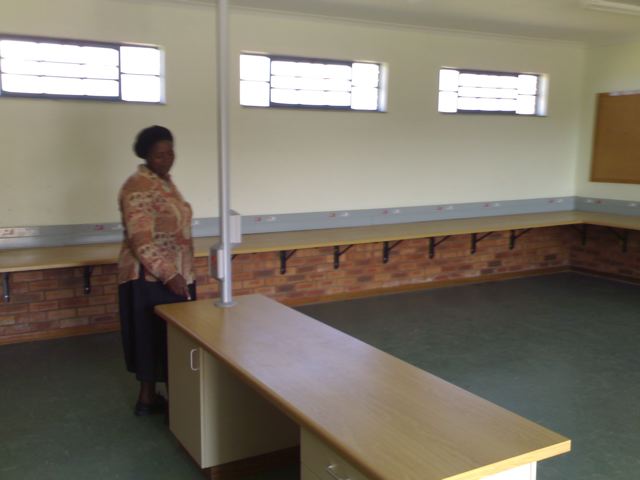
When I arrived here in 2006, about the first thing I did was put in applications for the school at Hole in the Wall to become a TuXlab. I have been in the IT industry since 1988 and have a huge amount of experience on everything from routers to servers to financial systems to web and graphic design; but Linux and networking are my forte, and helping the schools seemed like a perfect thing to do with all that expertise. I phoned and emailed and hoped and waited, but after 6 months of that eventually realized I was making zero headway with TuXlabs, and I asked my friend Ant Brookes to please put me in touch with anyone who could help. Ant put me in touch with Bernie Amler, Director of Social Responsibility at Uniforum; and my first call to Bernie lasted about an hour (cell phone rates = ouch!) and was most interesting indeed. Especially as Bernie didn't just want to do one at a time, but as many schools in the region as had power and available space.

Naspers owned Media24 is attempting to create a local portal in competition with Google.

There isn't really enough room for another new search engine operator and pesky web crawler, plus if ever there was a company that needed re-branding - Naspers could compete for top of the all-time list.

The Afrikaans publishing house with Broederbond roots has grown into Africa’s most successful media conglomerate. A few years ago Ton Vosloo, the chairman of Naspers was considered a mouthpiece for the conservative Afrikaner establishment that conceived, legislated and maintained apartheid. Vosloo was a member of the Broederbond; the secret society of lawyers, judges, parliamentarians, cabinet ministers and business and political leaders who ran the government and sought to empower the White Afrikaner population.

http://ntww1.csir.co.za/plsql/ptl0002/PTL0002_PGE157_MEDIA_REL?MEDIA_REL...

Researchers at the Meraka Institute have released an Open Source spelling game which supports all 11 official South African languages.

I'm hoping it may just turn out to be useful for computer classes at the 5 schools around here.

It's about a 40meg download, and is also available for Windows.

Download it here: http://www.brainhotel.org/openspell

Luckily I bookmarked some of them before Safari crashed. I knew it was going to crash. . . had so many things open. *sigh* I need a memory upgrade.

http://www.mg.co.za/articlePage.aspx?articleid=340659&area=/insight/insi... on the Traditional authorities.

http://free.financialmail.co.za/08/0530/features/hfeat.htm on the Xolobeni debacle.

http://free.financialmail.co.za/innovations/05/0603/einn.htm about the thin film solar system developed in SA.

Or as Screwmaster over at slashdot (http://hardware.slashdot.org/hardware/08/05/19/1953215.shtml) would have it: it's the old "When Hairy Met Sili" scam.

http://blog.fastmail.fm/2008/04/22/microsoft-closing-external-hotmail-ac...

Summary: Microsoft are disabling WebDAV access to all hotmail.com accounts. This means Hotmail Pop Links and Outlook Express access to hotmail.com accounts will stop working at the end of June 2008. You should download all your Hotmail email ASAP and tell people to stop using your @hotmail.com email address as soon as possible.

For many years, Microsoft has provided external access to hotmail.com accounts via a protocol called WebDAV. This is the protocol FastMail uses on the Options -> Pop Links screen to allow downloading of email from hotmail.com accounts. It’s also the same protocol that Outlook Express uses to access hotmail.com accounts.

Doesn't it ever bother people when they go to, like, www.yellowpages.co.za for example, only to find they don't have the business details of some very well known national company in there, because Supaquick (for example) don't pay Brabys to list them in their print service.

Some people honestly don't get the internet and the free information economy at all.

This site was exploited a couple of weeks ago. My own fault, for allowing PHP input. It just never even occurred to me!

Anyway... I took the usual precautions and upgraded everything... but I didn't even notice the ramifications for a couple of weeks more... until I logged out to test a problem that someone reported... and found I couldn't log back in!

The exploit came from a Chinese based IP address; and my paranoid suspicions are that they are the best internet censors in the world... and far too good friends with our government. No matter. I blackholed the entire network block - since the only 2 hits I ever received from there were over the period of the exploit.

That reminds me... it's interesting to note that only about 15% of this site's hits come from outside South Africa. I guess no one is really interested in coming here anymore. What with the crime, and sheer banana republic lunacy. (Telecoms for one thing, corruption for another.) We're the laughing stock of the world... as the only country on the Security Council to have voted against censuring the Burmese junta. Why is that do you imagine? As a supposed liberal country that used to be dominated by an oppressive militaristic police state it strikes me as rather hypocritical. But then many things about this government are - if not hypocritical - then simply downright obscene.

Seems there must be a vulnerability in older versions of Drupal 4.7.x. I'm not exactly certain what happened, but by injecting something into the create user page, someone was able to gain access to UID 1... (the administration account).

Everything is upgraded and back to normal now, but I'm worried about a SSH session that I happened to notice going on with someone in China this morning. I've blackholed that entire network and am running a tripwire for anything suspicious.

A lot of people seem intent on a full curriculum revisal to cater for the constructivist learning methodologies which the OLPC embraces -by it's very nature- before embarking on large scale distribution of the "little green machine" to developing countries.

Distributing the XO on a large scale and letting children /discover/ it's potentials is the fundamental first principal of "the vision"; but I agree that it can't be done blind: and it's not.

What few people seem to factor into their thinking -or adoption plans- is that the envisioned economy of scale drives not only the bottom-line pricing of the XO, but also the collaboration, cooperation and creation (on an unprecedented scale) of educational content and workable methodologies.

Even this doesn't scare me too much... yet...:

Chicago Developing 'Suspicious Behavior' Monitoring System

"Over the past few years, Chicago's Office of Emergency Management and Communications (OEMC) has been blanketing the city with a network of thousands of video cameras in an effort to remotely keep track of emergencies in real time. Now, with the help of IBM, the network is getting some smarts. IBM software will analyze the video and ultimately 'recognize suspicious behavior,' says OEMC spokesman Kevin Smith. 'The challenge is going to be teaching computers to recognize the suspicious behavior,' said Smith. 'Once this is done this will be a very impressive city in terms of public safety.'"

"Sony and the University of Alabama are working on a gigapixel resolution camera for improved satellite surveillance. It can see 10-km-square from an altitude of 7.5 kilometres with a resolution better than 50 centimetres per pixel. As well as removing annoying artefacts created by tiling images in Google Earth and similar, it should allow CCTV surveillance of entire cities with one camera. 'The trick is to build an array of light sensitive chips that each record small parts of a larger image and place them at the focal plane of a large multiple-lens system. The camera would have gigapixel resolution, and able to record images at a rate of 4 frames per second. The team suggests that such a camera mounted on an aircraft could provide images of a large city by itself. This would even allow individual vehicles to be monitored without any danger of losing them as they move from one ground level CCTV system to another.'"

Government eyes out One Laptop per Child

By Alastair Otter
www.tectonic.co.za

The One Laptop per Child (OLPC) project got a lot of attention from important government members at the Software Freedom Day celebrations on Saturday.

In this picture we have (left to right) Aslam Rafee, CIO of the SA department of science and technology, Maria Farelo, policy, strategy and regulations office of the government CIO of the department of public service and adminsitration, Karl Fischer, also of DST and the chief Software Freedom Day cheerleader, and Derek Hanekom, deputy minister of science and technology.

Communications Minister Ivy Matsepe-Casaburri announced that no undersea cable will be allowed to land in SA and provide cheaper broadband unless it is majority owned by local or African investors. It is not clear how this condition squares with the Government's wider commitment to liberalised markets. The move has also prompted Seacom to pull out of building its proposed East African cable and is everything that detractors of the South African Government feared would happen.

The South African move is designed to get EASSy to fall into line with the NEPAD Protocol, of which the South African Government has been the strongest supporter. The industry awaits a final set of guidelines from the Ministry. The South Africans have already led moves behind the scenes to try and get the region's incumbents to withdraw from the EASSy project.