
Take a walk on the Wild side . . .
xolobeni
Monday, 28 May, 2012 - 16:22
www.awesomesa.co.za
South Africa is a country that has lived through one of the most frightening, riveting, and inspiring political revolutions in history. Real radical change faces each one of us every day. How do we deal with the mistrust that has crept in among our people from years of separation and confrontation?
Richard Branson in his book – Screw Business As Usual – says:
"We've a chance to take a shot at really working together to turn upside down the way we approach the challenges we are facing in the world and to look at them in a brand new, entrepreneurial way. Never has there been a more exciting time for all of us to explore this great next frontier where the boundaries between work and higher purpose are merging into one, where doing good really is good for business."
Awesome SA supports an organisation called Sustaining the Wild Coast.
Sustaining the Wild Coast's (SWC) focuses on assisting traditional rural communities living along Pondoland's Wild Coast, in the northern coastal regions of the former Transkei of South Africa's Eastern Cape Province, to create a positive future for themselves. You can view the SWC Awesome SA article here.
SWC works with Wild Coast communities to find sustainable solutions that improve local livelihood prospects, while respecting local cultural traditions and maintaining the wealth of natural biodiversity and unique ‘sense of place’ that the Wild Coast is re-known for. One of SWC's focus area's involves promoting public awareness about issues and concerns affecting the Wild Coast and its residents, through articles and news reports and by assisting and encouraging journalists, writers and film-makers to provide in-depth and well-informed coverage of topics concerning the area.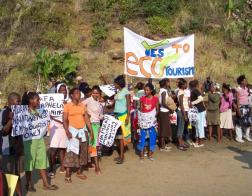
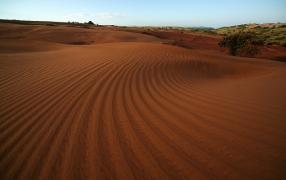
Two recent developments causing much concern for local people are ongoing proposals to open cast mining in the area, and the proposed routing of a tolled highway, a new extension to the existing N2 national road, through the region. SWC's dedicated Too Great a Toll fund is helping Wild Coast communities with resources to legally challenge the government's approval of the N2 ‘Wild Coast’ tolled highway. The Wild Coast communities are legally challenging the lack of proper consultation and other serious legal deficiencies in the N2 proposals Environmental Impact Assessment (EIA).
In Richard Branson's Screw Business as Usual, he is calling for people to turn capitalism upside down – to shift our values, to switch from a profit focus to caring for people, communities and the planet. He inspires both businesses and individuals to embark on a whole new way of doing things, solving major problems and turning our work into something we both love and are proud of.
Imagine if those driving the open cast mining and the building of a tolled highway - through one of the most pristine and unique wild areas of South Africa - would alternatively put their money into the following areas. Support the people who live on the Wild Coast in maintaining their cultural and ecological heritage, as Sustaining the Wild Coast is doing, with the following projects:-
- Skills development, mentorship, leadership and entrepreneurial development programmes.
- Skilling local residents and schools in permaculture cultivation methods, knowledge of indigenous plants, establishing indigenous plant nurseries and food gardens, and addressing and reversing environmental degradation.
- Promoting eco-tourism development initiatives along the Wild Coast which includes training hiking guides, establishing guided hikes, helping local people set up community based ‘homestays’ and networking with other eco-tourism development organisations to promote responsible eco-tourism.
- Assisting Wild Coast communities with advocacy, legal representation and specialist advice to enable them to 'own their future'.
Awesome SA is calling on South Africans who value and are proud of our country, to support the rural communities living on the Pondoland Wild Coast. We are calling for support from all areas of the globe and ask that you add your voices to the call of the Pondoland people.
Sustaining the Wild Coast needs support, because you know what... the future is not a place that we are going to go; it’s a place that we are going to create. Please reference Too Great A Toll when making donations to assist the Pondoland people in funding the legal challenge to sustain the Wild Coast. More details can be found on the SWC website www.swc.org.za. You can follow SWC on Twitter - @SWCOAST & on Facebook - SustainingtheWildCoast.
... Read more
Thursday, 10 February, 2011 - 20:25
From: www.iol.co.za February 8, 2011 By Ingi Salgado For some time, the state has withheld two pieces of information with significance for mining along the Wild Coast of the Eastern Cape. Under much pressure, the government has now released both.
Both documents are shocking, but taken together, they paint a cynical picture of a potentially concerted effort to engineer an economically viable dispensation for mining on the Wild Coast with scant regard for communities and environment.
The first document came in the form of the terms of reference issued by roads agency Sanral to an environmental consultancy for the proposed N2 toll highway, which hugs the coastal sites that prospective miners are eyeing. The terms of reference specifically instruct the consultant to provide “a strong motivation for excluding the R61 and current N2 as options”.
Imagine the outrage if the assessment for a fictional new highway between Durban and Johannesburg was not compared with the impact of upgrading the N3.
That we even have sight of these terms of reference is thanks to Cullinan & Associates, which applied under the Promotion of Access to Information Act. It acts for the Sigidi, Baleni and M datya communities, the Khimbili Property Association and residents in the amaDiba tribal authority.
The law firm first successfully opposed environmental authorisation for the proposed N2 highway in 2004, sending Sanral back to the drawing board.
Senior director Cormac Cullinan says: “It’s indisputable that if the new road doesn’t go ahead, it will have a major impact on the financial viability of mines... That’s a strong reason why they didn’t want to consider the existing route.”
The toll road appeal is now with the Department of Environmental Affairs. Cullinans alleges Sanral appears to have intended to mislead the minister because the agency initially denied its consultant had been specifically excluded from considering certain alternatives.
The second document to come to light is the nearly year-old report by Congress of Traditional Leaders of SA chief Patekile Holomisa, who led a task team assessing the award of a 2008 mining right to Transworld Energy and Mineral Resources to mine titanium on the Kwanyana block of Xolobeni on the Wild Coast.
The Department of Mineral Resources finally made Holomisa’s report public last week, and it is rather instructive. It points out that Transworld indicated a feasibility study would be carried out “as soon as the mining right is formally granted” – whereas the law requires proof that the mineral can be mined optimally. The report asks whether Transworld was allowed to dictate the pro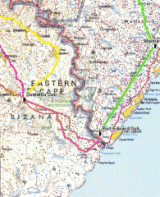 cessing of the application.
It also points out the mining right was granted without an environmental impact assessment, environmental management plan or further attention given to any of the department’s own stated requirements.
There was no study of the benefits of mining versus ecotourism and issues raised by the Department of Environmental Affairs were not addressed. The Department of Mineral Resources opted to reconvene the task team, which will hold hearings in Durban this month.
There is a third leg to the saga, a legal wrangle over the Commission for Traditional Leadership’s decision to dislodge amaPondo King Mpondombini Sigcau from the throne. Webber Wentzel says “a gross injustice to (our) clients appears to have been done, which cannot go unchallenged”.
Is it a coincidence that the deposed royals oppose both the Xolobeni mining and the N2 toll road?
... Read moreThursday, 6 May, 2010 - 11:21
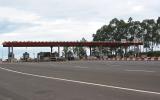 Bishop Geoff Davies - 6 May 2010 http://safcei.blogspot.com/2010/05/wild-coast-mining-and-toll-road.html The Wild Coast continues to be under threat from both the application to undertake sand dune mining and the N2 toll highway. The record of decision (ROD) for the N2 toll road was released on 19 April. It is stated that objections need to be made before 19th May. We are asking for an extension to this deadline but we are also told that DEAT is requiring a notice of intention to appeal. We attach this notice. We write now to ask that if you are registered as an Interested and Affected Party (I&AP) and wish to appeal, that you send in this form. Sustaining the Wild Coast (SWC) will shortly issue a brief outline regarding our concerns. We believe it best if comments come from a denomination or a congregation or a faith community, though an individual may also object. If you are not registered as an I&AP but wish to object, please do it through SAFCEI. We will include your appeal with ours.
I do emphasize that we in both SAFCEI and SWC believe that the development of roads in the Eastern Cape is important. Our concern is about the route of this proposed toll road and the fact that it is to be a toll road which will place an extremely heavy burden not only on the people of the Eastern Cape but also on the residents of Durban. As long ago as 2003, we asked SANRAL to upgrade the existing roads. This would not have required an extensive EIA and the work could have been completed by now. Their refusal has been extremely costly in terms of failed development and human lives lost as a result of the poor condition of the present roads. I continue to recall that one of the best priests of the Anglican Diocese of Umzimvubu, the Revd Madoda Hlwatika, lost his life on 6th January in 2004 on one of the very road we have asked to be upgraded. The greenfields route between Lusikisiki and Port Edward is not of concern only because of the threat it poses to the Pondoland Centre of Endemism but it will also isolate the present economic centres of the region, notably Mt Frere, Flagstaff and Bizana and it will have an impact on Kokstad. Certainly the residents of Umtata and Lusikisiki will benefit but the EIA does not include the matter of tolling. This is to be a separate application. We believe this is dishonest as residents of that area have not been informed that toll fees could be in excess of R75 to get to Durban. It is also absurd not to include the toll fees at the outset as the road cannot be built unless it is a toll road. This highlights the fact that the road is for the benefit of through traffic. The road will isolate communities and provide them with extremely limited access. We believe strongly that the people of the Eastern Cape deserve the development of a road system which does not punish them with excessively high toll fees. It would seem that it is the engineering companies that are driving this proposal. This application has emanated from the Department of Transport but is an unsolicited bid. We were told by the Department of Transport that it was not integral to their development plan. I think it would be fair to say that the people of Pondoland are divided on their opinion about this road. But there is unanimity in their desire for improved roads in the region. Those who will be directly affected by the toll road are extremely concerned not least because of the lack of consultation. We hope to send you further information shortly. With good wishes Bishop Geoff Davies. Kate Davies Southern African Faith Communities' Environment Institute (SAFCEI) kated safcei [dot] org [dot] za 083-468-1798 +27-(0)21-788-6591
Thursday, 29 April, 2010 - 10:11
Wednesday, 28 April, 2010 - 10:55
Tuesday, 13 April, 2010 - 09:57
PRESS RELEASE 12 -04 -2010 N2 TOLL ROAD - GOVERNMENT APPEARS OBLIVIOUS TO THE COMPLEXITY OF REAL ISSUES AT STAKE 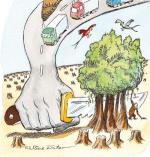 A recent parliamentary response to questions about the N2 Toll Road, posed to the Minister of Transport, shows the government has a deeply flawed understanding of the broader issues surrounding the N2 Toll road debacle. The Minister’s response suggests a government that is stuck in an inflexible time warp, basing its decisions on outdated, vastly flawed and unsustainable development projects that were conceived of in the early 90's, under scenarios vastly different from the situation that prevails today.
In reply to questions of whether the N2 was being planned as part of a broader spatial development plan, and how it would benefit the broader development objectives of the area, the Minister responded that the N2 was planned as part of the Wild Coast Spatial Development Initiative (WCSDI) intended to ‘unlock the development potential of the Eastern Cape’. The Minister mentions the establishment of the Pondoland Park as being a key component of the WCSDI, cites the road as being a key catalyst for the development of the area, and says benefits include positive economic impacts from tourism, retailers, service providers, jobs and investments from construction.
In terms of mitigations for negative impacts, the Minister agrees that the road will bring ‘disruption to the status quo’, but suggests that the preservation of the environment is a secondary consideration to the improved quality of life the road will supposedly bring. He also argues that it is only the 75Km (13%) of the Greenfields section that runs through the Pondoland Centre of Endemism (PCE) that is contentious, and that the narrow margins of the road reserve mean it is only 16% of the natural environment of the PCE that will be disturbed.
It sounds good and well, but a critical look shows these arguments to be misleading, highly contradictory, and totally oblivious to the realities at play in the region. The Ministers response implies that the Pondoland Park is central to the implementation of the WCSDI.
The concept of a Pondoland Park is also mentioned in the final EIR for the N2 Toll road as a key mitigation measure against acknowledged environmentally unsustainable impacts of the proposed N2 on the PCE, as a result of high ecological impacts. But the idea of a formally declared Pondoland Park, as it was presented to Wild Coast Communities by former Minister of the Environment and Tourism Minister van Schalkwyk, was rejected out of hand by local communities who reside on the land, who see it as nothing more than an attempt at a land grab of communal land by government authorities.
If the Pondoland Park is seen as key to carrying out the plans of the WCSDI, and of being central to mitigation measures against the high ecological impacts of the proposed N2, then how does government intend to proceed with a Park if this idea has been rejected by local communities, and consequently is no longer considered a viable option by the Department of Environment? If the Park is no longer an option, then how will the adverse impacts of the ‘Greenfields’ section of the N2 be mitigated? One cannot talk development in the Wild Coast area without also considering the spectre of the Xolobeni mining proposal.
If the government is seriously considering tourism as key to unlocking the development potential of the region, as the Minister suggests, then how can government be simultaneously entertaining the idea of mining in the very same area where they are talking about a Pondoland Park and increasing tourism?
- If ‘disturbance’ of the area is going to be confined solely to the road surface and road reserve, as the Minister suggests, then how is the road going to bring all the supposed secondary benefits and the ‘opening up for development’ of the region that the Minister sings lyrical about?
- If the road is intended to be a catalyst for secondary and ribbon development, then to say that ‘disturbance’ to the PCE will be limited to the 16% directly affected by the road surface and road reserve is a highly deceptive statement, to say the least.
The Minister misses the point completely when he dismisses the issues around the “Greenfields” section as being insignificant when viewed from the perspective of the road as a whole. This ‘Greenfields’ section is the only entirely new section of the road being proposed, with the rest of the road being an upgrade of existing road surface.
It is because of the social and environmental inappropriateness and unsustainability of the new ‘Greenfields’ section, and the extra taxes that will be imposed on the public in the form of tolls to pay for the road, that the proposed N2 has caused such a debacle and has been so opposed by the public.
The Minister presents his arguments as if the Toll road, and the supposed benefits it will bring, is the only option by which to bring ‘development’ to the region. The Minister overlooks the fact that there are many other options of ‘development’ that will bring benefits to the region without the high, and unsustainable, cost of human and environmental disruption that the proposed N2 will bring to the PCE.
These include upgrading existing local roads, and re-planning so that the proposed ‘Greenfields’ section of the N2 runs outside of the PCE. A road alone will not bring 'development'. Only investment in people brings 'development'. This requires an integrated approach that goes far beyond road building. It requires an investment in education, skills development, health improvement, democratic structures that meaningfully engage with local communities and public participation at a grass roots level, environmental conservation and restoration of degraded environments, and overcoming the gross mismanagement that is rife in local government and municipal structures and which has played a large role in the perpetuation of non-service delivery in the region.
Far from revealing that the N2 proposal is part of a well thought out Spatial Development Plan for the Wild Coast Region, the Ministers response highlights the deep and inconsistent fatal flaws inherent in the N2 proposal. Sustainable development depends upon conserving the structures of the environment upon which all life, including all human life, depends.
If the government is truly serious about addressing issues of poverty alleviation and inequality in the rural areas of Eastern Cape, while paying more than lip service to environmental considerations, then they need to go back to the drawing board and rethink their concepts of sustainability and development, instead of trying to perpetuate a flawed and unsustainable development model based on inappropriate models of development thinking that were fashionable in the 90s’. ENDS Val Payn On Behalf of Sustaining the Wild Coast (SWC) swcoastvalgmail [dot] com cell - 083 4416961
Wednesday, 10 March, 2010 - 11:40
THE decade-long N2 Wild Coast Tollroad debate was re-ignited this week with the release of a new – and final – environmental impact assessment.
Over 7800 submissions from the public were included in the report, which started afresh in 2007 by CCA Environmental (Pty) Ltd after an original EIA was shelved in 2004 when it was found that the “independent” environmental consultants had financial links with companies that hoped to build the road.
If approved, the project will extend over a total distance of approximately 560km between the N2 Gonubie Interchange and the N2 Isipingo Interchange (south of Durban in KwaZulu-Natal). An additional 25 tolls will be added to the route, most of them in KwaZulu-Natal.
The road will bypass towns like Kokstad and Mount Frere which are currently on the route and therefore they stand to lose the benefits from passing motorists.
The EIA divides the route into segments as it outlines both positive and negative impacts of the road as it runs along the coast.
For example, between Ndwalane and the Ntafufu in the heart of the Transkei, the report acknowledges that there will be a “loss of sensitive habitats” during construction, as well as “faunal impacts with loss of faunal diversity and loss of species of special concern”.
It also notes the impact on environmentally sensitive areas due to increased access to these areas by tourists.
These are just a few noted concerns, and they are balanced in the report by positive points, which include increased employment opportunities, improved safety for road users, and a general increase in tourism and tourist facilities after the number of people travelling through the area increases.
Closer to Gonubie, the report notes a risk to the water quality in the estuary during the operational phase, but then adds that on a positive note there will be an impact on the development of a nodal point at Mooiplaas.
There has been a huge reaction to the N2 Toll Road since the project was first raised and the new EIA took into consideration submissions from interested and affected parties.
Almost all the submissions from Kwa-Zulu Natal (97.6 percent) were negative towards the tolling of the Upper South Coast, whereas only 8.5 percent of submissions from the Eastern Cape addressed the tolling of motorists.
“Border-Kei Chamber of Business is on record as endorsing the toll route and supporting it, as long as due consideration is given to the environmental impact of the road,” BKCOB chief executive Les Holbrook said yesterday.
“In our view the road will benefit the area and the advantage of it will be enormous. We keep seeing the Eastern Cape as the second poorest province in the country but we have to realise that it is within us as a country to do something about this. (With this road) we have the opportunity of opening the Eastern Cape up to the rest of the country.”
On the opposite side of the spectrum, long-time Port St Johns’ resident John Costello said that while he had nothing against development as such, he was concerned about what such a massive construction undertaking would do to the sensitive forests and waterways of the Transkei.
“The factual reality is that what was, is rapidly disappearing and no- one is doing anything about it,” Costello said of the fragile ecosystems that he had seen slowly degrading over the past 30 years.
“I’m not against development but we are sitting on an ecological time bomb.”
The EIA can be viewed at 40 libraries in KwaZulu-Natal and the Eastern Cape – including at the East London library – or can be viewed at www.ccaenvironmental.co.za and www.nra.co.za. — By TARALYN BRO, Business Reporter, taralynbdispatch [dot] co [dot] za
From: http://www.dispatch.co.za/article.aspx?id=385943
Also see: http://blogs.dispatch.co.za/dispatchnow/2010/03/09/n2-toll-road-debate-r...
... Read moreThursday, 15 October, 2009 - 06:07
 2 October 2009
LRC submits expert evidence against mining in Xolobeni
On 28 September 2009 the Grahamstown office of the Legal Resources Centre (LRC) submitted two expert reports to the Minister of Minerals and Energy on behalf of the AmaDiba Crisis Committee (ACC). The reports were in support of the ACC’s appeal to the Minister to set aside the mining right granted to Transworld Energy Minerals(TEM) at Xolobeni in the Eastern Cape.
One of the reports compiled by Jan Meyer, a soil fertility expert, provides that the heavy mineral mining operations planned by TEM have been discontinued in other jurisdictions such as Australia and New Zealand. TEM is a subsidiary of the Australian group Mineral Resources Commodities (MRC).
The report states that ‘a significant amount of heavy mineral mining previously took place along the East Coast of Australia, New South Wales. However many of the mining operations in New South Wales have been asked to desist.’
The report also lists 10 reasons why the mining operations in New South Wales have been discontinued and describes several of them as relevant to the proposed mining at Xolobeni.
This means that TEM seeks to legitimise operations in South Africa regardless of their negative impact. The intended mining will adversely affect the traditional way of life of the Xolobeni community, some of whom have occupied the land for centuries, and will irreparably damage the coastline.
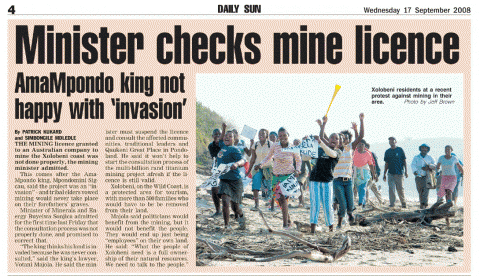
This matter began on 2 September 2008, when the ACC made an application to appeal/review the decision in terms of the Minerals and Petroleum Resources Development Act of 2002. The basis for the appeal/review is that the mining right was granted to TEM without sufficient and reasonable consultation with the Xolobeni community as an interested and affected party.
It is not known when the Minister will reconsider the decision to grant the licence but the Department has announced that the appeal/review will take place.
For further information contact the Legal Resources Centre:
Sarah Sephton
Attorney
0466229230
For some background on the status of the appeal, please see this Mining Weekly article from March this year. It's great to see Creamer Media batting for our team.
... Read moreThursday, 20 August, 2009 - 16:31
Tuesday, 18 August, 2009 - 17:24
From www.iol.co.za
August 16 2009 at 06:51PM
The dispute over community consent for Xolobeni Mineral Sands Project is hotting up as Minerals and Energy Minister Susan Shabangu considers granting the final go-ahead.
The plans are to excavate 346 million tons of titanium and other heavy minerals along a 22m stretch of the Wild Coast below Port Edward.
Mining it will generate R560-million yearly, with R42m to be spent on local salaries each year and R2,9-billion going to the government.
But conservationists are protesting because the mineral area lies in a vast, unspoilt wilderness region that offers considerable ecotourism potential.
This article was originally published on page 6 of Cape Argus on August 16, 2009
Comment:
Important to note that not just environmentalists, but hundreds of members of the community attended the protest march last year, including many elders, the headman, and other prominent community leaders. As if more proof was needed, even King Mpondomise and the Royal House are against the proposed strip mining.
See also: Minister admits consultation process ‘flawed’
and Questions hover over Wild Coast mining deal amongst other updates and info at www.wildcoast.com/xolobeni.
... Read moreThursday, 6 November, 2008 - 16:12
Xolobeni, Mzamba, and finally Port Edward, mark the Northenmost boundary of the Transkei Wild Coast, and fall into the famous Pondoland Center of Endemism.
New tourism ventures will be springing up in this area that is being threatened with strip mining for titanium.
For up to date information on the mining saga: www.wildcoast.com/xolobeni
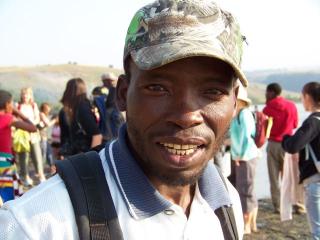 If you want to explore the threatened area from Mzamba to Xolobeni, passing the Cretaceous Deposits and Petrified Forest at Mzamba River, Benny the Tour Guide can be contacted on 079-1985 975 / or through Sonya on 074-336 7862 - for a guided day-trip.
We will be adding further links as they become available.
In the meantime, if you're coming to the Wild Coast and you're looking for a detour along the way, or perhaps you've visited us and are on your way North towards Durban and Mocambique; here is a helpful link to some tourism destinations on the KZN South Coast: www.gosouthcoast.co.za
... Read moreTuesday, 12 August, 2008 - 19:17
The contents of the petition follow below.
Please download, print, sign and submit this petition: www.swc.org.za/petition.pdf
WHY MINING THE WILD COAST IS A VIOLATION OF HUMAN RIGHTS By John G.I. Clarke
The Department of Minerals and Energy has announced that it intends awarding a mining licence to Australian mining company MRC on 31 October 2008 to mine the Kwanyana Block of the Amadiba Tribal Administrative Area, on the Pondoland Wild Coast. This announcement has been made before the SA Human Rights Commission has completed its investigation into human rights violations lodged by local residents allegedly perpetrated by agents of MRC.
If the Minister of Minerals and Energy signs the mining licence and Environmental Management Plan on 31 October, we believe it would be in gross violation of the Constitution of South Africa, notably the Environmental Right enshrined in Section 24 which states.....
“Everyone has the right to an environment that is not harmful to their health or well-being; and to have the environment protected, for the benefit of present and future generations, through reasonable legislative and other measures that prevent pollution and ecological degradation; promote conservation; and secure ecologically sustainable development and use of natural resources while promoting justifiable economic and social development”. We believe the Minister will be in breach of the oath of office she made to “uphold the constitution of the Republic of South Africa” upon her swearing as a cabinet minister because the Xolobeni Mineral Sands venture has been shown to fall very far short of “justifiable economic and social development”, for the following reasons.
- Seven of the fundamental human rights enshrined in the South African Constitution have been violated by the mining company and its supporters. The attached report by the HRC includes the complaint, and reports on its observations and conclusions. The allegations have not been contested by any party named.
- The report explains that in the process of investigating the allegations, the HRC found that the Departments of Minerals and Energy and the Environmental Affairs and Tourism “were not on the same page with respect to the proposed development”, and that the “overwhelming majority” of the approximately 3000 directly affected local residents “were opposed to the venture”.
- Since the HRC report was published in November 2007, it was further found that the public participation process for the conduct of the EIA was grossly biased in failing to ensure those residents most affected by the mining proposal were capacitated to participate meaningfully. Besides failing to educate the local residents, meetings were held some distance away from the mining area. In one instance when a local resident Nontle Mbuthuma raised objections to this, she was forcibly evicted from the meeting by an employee of the mining company (see report by East London Daily Dispatch).
- All relevant authorities have not been in full compliance with the relevant statutes: the Mineral and Petroleum Resources’ Development Act (MPDRA), the National Environmental Management Act (NEMA), and the Interim Protection of Indigenous Land Rights Act (IPILRA). The HRC asked for documentation from the relevant Departments (DME, DEAT, and the Department of Land Affairs). The departments only responded after the HRC was forced to issue the respective ministers with a subpoena compelling them to respond. They complied hours before the subpoena hearing was due to start, forcing the Chair Commissioner Leon Wessels to adjourn the hearing to give the HRC time to study the 11th hour submission by DME.
- Shortly before the Ministerial Subpoena hearing, an evaluation report on the EIA by DEAT officials was obtained by SWC, in terms of the Promotion of Access to Information Act, which in fact revealed major contradictions between DEAT and DME interests. The DEAT report has advised that “The mining is a short-term economic activity with long-term negative impacts whereas the ecotourism in the area has an unlimited life span,” concluding with a strong recommendation that the mining licence should not be awarded, given available information. It emerged that the DEAT report had not been submitted to DME before the 21 Dec 2007, deadline, and would have been disregarded, had SWC not obtained it.
- The mining venture is in both its parts and its whole a wasting activity in that it entails the use of and impact upon eco-system services provided by nature (water, energy, and soils) for the extraction of non-renewable mineral resources for industrial applications, in such a manner that these eco-systems will be degraded in their capacity to provide for sustainable livelihoods once the minerals have been extracted. It will thus destroy the local resource base upon which community based sustainable development is absolutely dependent.
- The mining is serving the short-term vested interests of a few local elites and a foreign corporation, and the impacts will result in greater poverty and social disintegration in the area due to the very limited benefits it will bring to alleviate material poverty and raise basic living standards.
- The mining venture will not only hamper the viability of lon-term sustainable development initiatives, but will also continue to negatively impact upon already existing eco-tourism enterprises, and destroy fledgling community development processes along the Wild Coast.
- The mining venture is in conflict with several of South Africa’s agreed international obligations to sustainably conserve and manage our biodiversity and ensure benefit-sharing from such use, including under the Convention on Biological Diversity (CBD).
- Suggested mitigations of environmental impacts are not viable or possible (given the available data and information on which they are based), which will therefore result in the destruction of a unique, internationally recognised centre of endemism – with the risk that this will push a number of threatened (red data) endemic species to extinction due to their restricted ranges within the centre of endemism.
- Mary Robinson, former UN High Commissioner for Human Rights and former President of Ireland, while visiting South Africa last year, advised civil society to heed the words of Eleanor Rooseveld. “Where, after all, do universal rights begin? In small places, close to home - so close and so small that they cannot be seen on any maps of the world... Unless these rights have meaning there, they have little meaning anywhere. Without concerned citizen action to uphold them close to home, we shall look in vain for progress in the larger world.” Support the Sustaining the Wild Coast NPO by donating here: http://www.swc.org.za/make-a-donation/
Monday, 14 May, 2007 - 15:07
This is an appeal to everyone who cares about the future of the Wild Coast to please send a mail to xolobenigcs-sa [dot] biz and register as an I&AP. Download the EIA and IAP registration form Who are the Interested & Affected Parties? (I&APs) They are persons who will be directly and indirectly involved and/or affected by the project. An IAP's role is to:
- § Register with the environmental consultants, who will include you on a database of I&APs in order for you to receive future project information and/or formally record issues and concerns
- § Attend public events to obtain further information, interact on a one-to-one basis with the project team, and/or raise issues and concerns; and
- § Contact the consultants to obtain further information and/or raise issues and concerns.
(For more information please visit www.swc.org.za)
... Read more