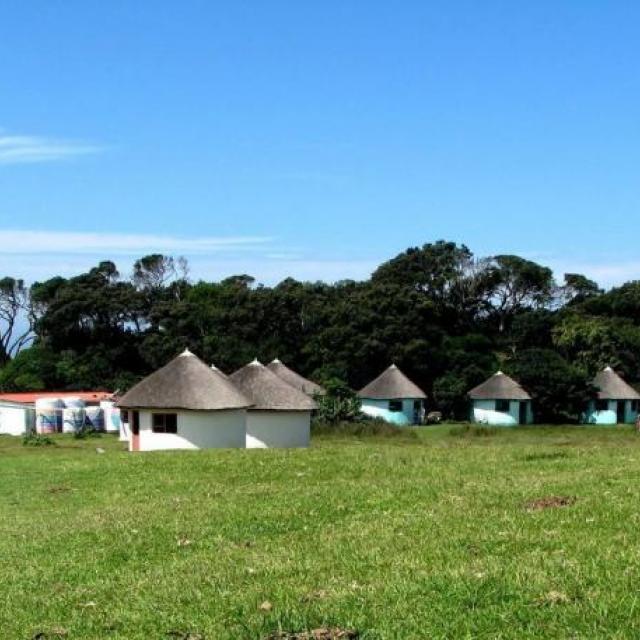
"Mining the Pondoland Wild Coast is the moral, cultural and aesthetic equivalent of quarrying Ayers Rock for granite, or the Great Barrier Reef for calcium carbonate." ~Richard Spoor
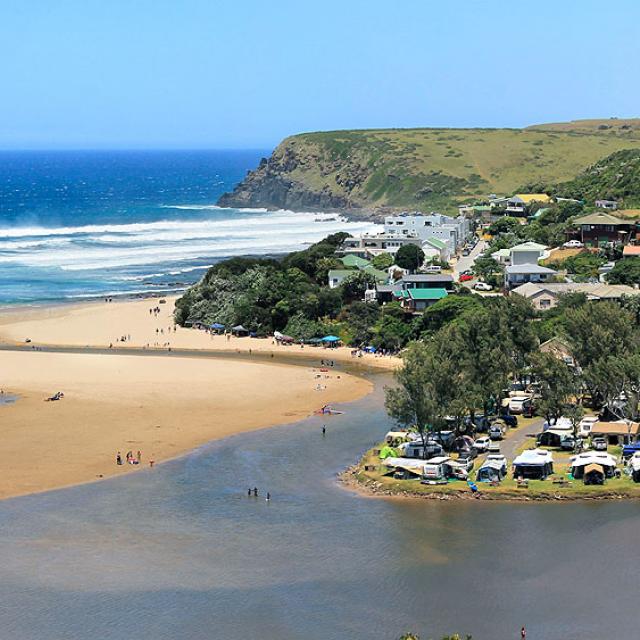
The Wild Coast is the most beautiful coastline on Earth; and is host to the Pondoland Centre of Endemism (PCE)... one of 34 internationally recognized biodiversity hotspots on our planet Earth.
This site is essentially a tourism information portal - where local businesses can register and upload their details and photos on the internet for free. Unfortunately, despite the fact that South Africa is a signatory to the Convention on Biodiversity, our government and certain vested interests are flagrantly threatening the PCE with titanium strip mining - and doing everything in their power to pave the way for autocratic control over the mining industry regardless of environmental impact issues.
SPECIAL ALERT!
Comments due by today !!!
Public Hearings: National Environmental Management Amendment Bill (36-2007)
The Portfolio Committee on Environmental Affairs and Tourism will be conducting public hearings on the National Environmental Management Amendment Bill (36-2007).
Deadline for written submissions: November 2nd, 2007
Public Hearings: November 6th, 2007
Attention:
Ms. Albertina Kakaza
Email: akakaza@parliament.gov.za
Fax: 021 403 2808
Click here to obtain a copy of the Bill.
Contact:
Ms. Albertina Kakaza 021 403 3765
(Note: basically the amendment appears to remove the mining industry from the NEMA (National Environment Management Act) and places overriding authority at the discretion of the minister of minerals and energy. Further, it vitiates environmental controls in favor of the commercial consequences - and allows decisions to be made by any minister or MEC .
Environmental Affairs and Tourism: Minister Valli Moosa's 2002 Budget Vote Speech
It's not really news, nor yet history, but I hope the sentiments expressed in this speech (full speech link above... excerpted below) are carried through by the SA government.
Letter to Xolobeni IAPs re Revised Scoping - September 2007 Final
The most significant change in the Revised Environmental Scoping Report is therefore the exclusion of the smelter from the Xolobeni Heavy Mineral Sands Project. This implies that the smelter will no longer be considered as part of the project and will also not be assessed in the Environmental Impact Assessment.
The Xolobeni Mineral Sands project is situated approximately 250 km south west of Durban and approximately 60 km south east of Mbizana and 30 km south of Port Edward in the Eastern Cape Province. The prospecting activities undertaken by TEM have indicated the feasibility of mining heavy minerals in the area. In accordance with the requirements of the Mineral and Petroleum Resources Development Act (MPRDA) and the regulations promulgated under Section 24 of the National Environmental Management Act (Act 107 of 1998) (NEMA), an Environmental Scoping Report was compiled and submitted to the Department of Minerals and Energy (DME) on 25 May 2007.
Fort Hare and Rhodes universities' Centres of Excellence have established an e-commerce portal to sell art and crafts manufactured by the community members of Dwesa / Cwebe.
Please support this initiative and visit their website at www.dwesa.com.
The site is maintained by the Siyakhula project - which aims at developing and field-testing the prototype of a simple, cost-effective and robust, integrated E-business platform in the rural communities of South Africa.
Bookings for the "hotel-hopping" Wild Coast Walk between Kob Inn (north) and Cintsa (south) can be made through SA Adventure Trails. Phone Paul Colvin on 082-3234022 or email info@trails.co.za
The 5 day 4 night trail covers 60km+ of pristine coastline : wide, shell-filled beaches, rocky headlands, coastal forest, estuaries and river mouths. Walk between 15-20 km per day with a guide while your luggage is transferred round to the next hotel in the chain. Stay overnight in comfortable hotel rooms with good food and company and leave next day after a hearty breakfast. After your last night stay you will be picked up and taken back to your start point where your cars will have been safely parked or driven round to East London airport to catch your return flight.
Optional side activities include canoeing on the Kei River, horse riding on the beach or spending your last night at a bush camp in a private game reserve.
Clivia robusta (Amaryllidaceae)
is a tubular, pendulous-flowered Clivia species, restricted to the Pondoland Centre of Endemism, South Africa. The unique morphology, distribution, karyotype and molecular fingerprint distinguish it from all other pendulous-flowered species in the genus.
Distribution
This taxon is endemic to the Pondoland Centre of endemism, with a distribution from Port St. Johns in the south to the Mzimkulu River in the north.
Habitat
Restricted to Msikaba Formation sandstone, the habitat is characterised by rugged plateaus (100-500 m above sea level) that are deeply dissected by narrow river gorges, within which occur isolated forest patches, containing mixed tropical and Afromontane elements. Mean annual rainfall varies from 1 000-1 200 mm and occurs mainly in the summer months. The mean annual temperature along the coast is around 20°C. The soils are usually sandy, acidic, highly leached and often shallow .
"An article John Clarke has co-written with Richard Spoor says the threatened area is of inestimable cultural and environmental value. Hosting the Pondoland Centre for Endemism, a global biodiversity hotspot, it is arguably the most beautiful coastline on Earth.
Taking issue with the Australian company, the article adds, "Mining the Pondoland Wild Coast is the moral, cultural and aesthetic equivalent of quarrying Ayers Rock for granite, or the Great Barrier Reef for calcium carbonate."
Read the full Sunday Tribune article on the threat to our dunes - by Leon Marshall.
New threat to our dunes
As an Australian mining company plans to plunder the dunes of the Wild Coast, Leon Marshall ponders whether the lure of jobs and wealth creation will overcome pressing environmental concerns
May 13, 2007 Edition 2
Leon Marshall
Shades of St Lucia are hanging heavily over the Wild Coast, where dune mining is causing divisions in the community. Even the arguments are the same, as are the rising tensions that have led to allegations of threats and acts of violence.
Threatened nature in South Africa
Please support the international "Save the Wild Coast Campaign" by sending a letter or fax to the South African President, Thabo Mbeki and the Minister for the Environment, Marthinus van Schalkwyk.
Download a specimen letter (RTF file, 10kb)
Thank you very much for your help.
Background Information:
Wildcoast - Pondoland Centre of Endemism
The Pondoland centre of endemism is located in the Eastern Cape Province on the shores of the Indian Ocean of South Africa. The Pondoland Centre, as part of the Maputaland-Pondoland Region, has subsequently been acknowledged as one of the important centres of plant diversity and endemism in Africa. The area is the smallest of the 18 centres of endemism and boasts 1,800 plant species.
Late in 2004, Washington-based "Conservation International" published the book "Hotspots Revisited" in which 34 " Hotspots" are identified as "Earth’s Biologically Richest and Most Endangered Ecoregions". One of the newly added Hotspots is the Maputaland-Pondoland Region. The Pondoland Centre is the smallest and the most vulnerable.
There are 39 European Migratory birds found in the area to be impacted upon by the proposed Toll Road. Two species are globally threatened: the White Stork (Ciconia ciconia) and the Corncrake (Crex crex) while one species is globally near threatened: the Lesser Kestrel (Falco naumanii).
South Africa is signatory to the Convention on Biological Biodiversity. Article 6 of the convention provides for General Measures for Conservation and Sustainable Use and requires contracting parties to develop national strategies, plans and programmes for the conservation and sustainable use of biological diversity and to integrate these as far as possible into relevant sectoral programmes. Currently South Africa has developed the National Biodiversity Strategic Action Plan as part of the obligations to the Convention on Biological Biodiversity.
South Africa is also a signatory to the Convention of Migratory Species of Wild Animals. The primary objective of the Convention is accordingly to protect migratory species. One of the objectives is to encourage "range states" to conclude agreements for the conservation and management of species listed in appendix 2 of the Convention.
In 2002 the South African National Roads Agency Ltd, accepted an unsolicited bid by a construction consortium to construct a Toll Road from East London in the Eastern Cape to Port Edward in Kwa-Zulu Natal. Currently 85% of the existing road is being upgraded.
The construction consortium has proposed to develop a new section of road "Green fields" between Lusiksiki and Port Edward (85 kilometres in length). This section of road will traverse through the Pondoland Centre of Endemism, thus impacting on area that has been internationally recognized as a "Global Hotspot" for flora and fauna.
The South African Minister of the Department of Environmental Affairs and Tourism, Minister van Schalkwyk, announced on the 31st August 2005 that an agreement between the Eastern Cape Department of Nature Conservation and the National Department had been reached to create the Pondoland National Park. The Minister was however, extremely vague as to where the boundaries of the proposed Pondoland Park would be.
The "Save the Wild Coast Campaign" has welcomed this commitment, however the Minister has declined to confirm whether this will exclude the construction of the controversial 85 kilometres of road through the Pondoland Centre of Endemism as well as a proposed titanium strip-mining application along the 220 kilometres of pristine coastline. Word in the house of Parliament is that the road will proceed in spite of the fact it will travel through the area that should be set aside as a National Park.
The "Save the Wild Coast Campaign" has led an advocacy and lobbying campaign to re-route the "Greenfields" section of the road to a section known as the R61 which travels in close proximity to many towns and settlements. This option would benefit many thousands of inhabitants and be a sustainable option in terms of poverty alleviation and sustainable job creation, while ensuring the protection of a globally recognized hotspot and access to intergenerational equity.
The SWC require international support for this advocacy to ensure that South Africa honours its commitment as signatories to The Convention on Biodiversity and The Convention of Migratory Species of Wild Animals.
International support for this measure addressed to the National Minister, Minister van Schalkwyk would give impetus to the campaign and ensure South Africa’s accountability to international obligations.
If there are any questions please contact the "Save the Wild Coast" campaign directly:
The Wild Coast Campaign
PO Box 52
Port Shepstone
Kwa-Zulu Natal 4240
South Africa
Raspalia trigynaTHE GHOST OF THE PONDOLAND CENTRE
Around the turn of the century, this attractive shrub was mentioned by Thomas R. Sim in the 1900 “Agricultural Journal of the Cape of Good Hope” 16:21-42, 104-114. He states that it was “abundant along streams above the (Magwa) falls”. Later on, he records it in his “Forests and Forest Flora of the Cape Colony” published in 1906. It was only known from the Mzikaba Formation, a sandstone outcropping with which the Pondoland Centre of Plant Endemism (PC) (Van Wyk 1994) is congruent. This is a very small centre of 18,800 hectares located across the provincial boundary between the Eastern Cape (formerly known as the Transkei) and KwaZulu-Natal and lies along the coastline stretching no more than 15 or so kilometres inland with a maximum altitude of about 400 to 500 metres.
This elusive plant with the scientific name of Raspalia trigyna was named for a Professor of Botany in Paris, F. V. Raspail. It was originally described as Berardia, another genus in the family Bruniaceae. This family is nearly endemic to the Cape confined to the winter rainfall region – but with this one exception in the summer rainfall area.
Raspalia trigyna
It was known earlier from only four collections: Dr. Sutherland, the Surveyor-General of Natal, collected one but gave no locality; another was found at Murchison near Port Shepstone by the renowned curator of Durban Botanic Garden, John Medley Wood; one was found at Mkweni River by William Tyson when teaching in Kokstad and the fourth was that mentioned above, by T. R. Sim. All these records are from the late 1800s or early 1900s. This gave a total distribution of about 80 km. Since that time, it lapsed into obscurity.
In 1962, the well-known amateur botanist and conservationist, Mr. Hugh Nicholson retired to St. Michael’s-on-sea on the KwaZulu-Natal south coast. His retirement interests included the creation of an arboretum on the grounds around his home “Skyline” and the exploration of the vegetation of the surrounding area. One of his early Thursday botanical walks took him to the Umtamvuna Nature Reserve (UNR) and there he found, to his surprise, a single unidentifiable plant growing on a stream bank. It was a shrub standing about a metre and half high and covered with a mass of tiny white flowers. This was sent off to Mr. R G Strey at the Natal Herbarium who identified it as the elusive Pondoland ghostbush. It was in good health growing in very moist conditions on the bank of a small stream where fire was unlikely to invade with any force. With its identification, the strange history was revealed and since then, Mr. Nicholson always encouraged his group of enthusiasts to keep watch for another specimen. The mass of tiny white flowers which makes the plant stand out and so easy to spot but when it is not flower it becomes one of those obscure small fine leaved plants which grow along the sandstone streams.
The UNR plant was apparently the sole surviving known specimen of this species and in the ‘80s, it started to fail. It declined from a healthy one and a half metre shrub to a single remaining 30 cm shoot and finally in 1987, it was clear that it was beyond recovery. Dr Hannes de Lange of the Endangered Plant Laboratory at Kirstenbosch came up to collect material to try and propagate but the amount he dared remove from the ailing plant was so tiny that all attempts at propagation had failed. In November 1987 our Umtamvuna plant finally gave up the ghost and the species, so far as was known, was thought to be extinct.
Prof. Braam Van Wyk of the Department of Botany of Pretoria University is the authority on the Pondoland Centre of Plant Endemism which arose from his research over the years and resulted in the publication of a number of new species. The PC is well known for its suite of endemic woody plants as well as grassland endemics. In July of 1988, Braam had just completed the publication of his Field Guide to the Flowers of Witswatersrand and Pretoria and he was ripe for an excursion. It was clear that we had to undertake a field trip to try and find another plant or plants to perpetuate the species.
A group was made up of interested and knowledgeable people and we set of on this search to the Transkei. This extensive exploration covered the coastal area starting from Mazeppa Bay in the south looking into every stream we came across as we headed north. To everyone’s great pleasure and excitement, our search was eventually successful with discovery of a fine two metre specimen by one of us (Trevor Streever) near Magwa Falls. Nevertheless, it was still only a single specimen. Therefore, in one year it had changed from a KwaZulu-Natal endemic known from a single specimen to and Eastern Cape one. Our floral “rhino” had charged back to life but with an even more tenuous hold on life than the rhino.
An urgent message was sent to Dr. Hannes de Lange of the Kirstenbosch Endangered Plant Laboratory. He came and collected cuttings from the plant and after much trial and error such as attempts to graft cuttings onto other Cape species of Raspalia, sufficient cuttings took successfully and plants were raised which allowed the establishment of small populations in both the U N R and the Mkambati Game Reserve. Naturally, all these plants were clones of the Magwa plant. The Magwa plant survived for some years before it too faded and died in 1995 leaving us with the belief that the species might well be extinct in the wild.
So matters remained for some years with all of us on the lookout for other plants. At last, on one of Mr. Nicholson’s regular Thursday walks on the Western Heights in August 1995, while the rest of the group relaxed after lunch, one of his apprentices, Jo Arkell, wandered off and returned with a branchlet. This was presented to “Mr. Nic” who, after some consideration, was happy to declare it Raspalia trigyna. This exciting find was located down a stream about 20 metres off the normal path which “Mr. Nic” had walked over the years! Once more Dr de Lange came up from Kirstenbosch to take further cuttings and to assess the possibilities for cross-pollination. He examined the flowers under the microscope and found that them to be self-incompatible but the globe on his microscope blew before checking the cross pollination potential but he felt that the chances of crossing between the new plant and the clones were not good. He cross-pollinated both ways between the two groups of plants but subsequently we never found any seed.
Years went by before another excitement occurred with the discovery of a plant in Mkambati Nature Reserve by manager, Dirk Prinsloo, a plant enthusiast, in May 1999. This small plant was wedged into some rocks in the bed of a stream and its broken look testifies to its struggles to survive the yearly floodwaters. As with all the plants seen, it was in a position where fire would be unlikely to penetrate.
The latest stage of the history of this unusual plant came in May 2001 when Simon Woodley, a keen indigenous plant nurseryman, together with a friend, Matt Williams, found a tiny population south of the Msikaba River. With great excitement, on closer inspection, it proved to be a functioning breeding population. This remarkable discovery seems to underline the vulnerability of the species as the site is a mere 20 metres long by 2 metres up a stream bank. It is on a steep bank facing south west situated at the base of a wetland giving year round cool moist conditions. Many of the plants in the PC which have an affinity with the Cape winter rainfall region survive on these cooler slopes. The population consists of 12 larger plants up to 1.2 metres tall with around a dozen smaller ones but the important point was the presence of a good number of seedlings of different sizes. The preferred habitat for the seedlings is under the overhanging bank is cool shady conditions. The locality of this remarkable colony is not available to the public.
A very small seedling was sent immediately to Braam van Wyk who confirmed that it was definitely a Raspalia trigyna. Seed was collected from the plants and this proved to be fertile. The recovery plan for Raspalia trigyna allows Simon Woodley of Indigiflora Nursery to propagate the plant with the long-term objective of establishing more populations in the wild and making plants available for gardeners. The first seedlings will be planted to create ex-situ breeding colonies to ensure availability of seed stocks as the breeding colony is not protected or conserved in anyway. One will be in the UNR and the other at Mkambati Nature Reserve.
Perhaps, one day you may so lucky as to have a Raspalia trigyna growing in your garden!
Tony Abbott December 2003
This is an appeal to everyone who cares about the future of the Wild Coast to please send a mail to xolobeni@gcs-sa.biz and register as an I&AP.
Download the EIA and IAP registration form
Who are the Interested & Affected Parties? (I&APs)
They are persons who will be directly and indirectly involved and/or affected by the project.
An IAP's role is to:
Gladioli are colorful garden plants that have been grown in Europe for more than 250 years. Interestingly, these garden plants were originally cultivated from hybrids of wild gladioli native to South Africa.
Gladiolus oppositiflorus is an important species in the breeding history of a number of Gladiolus hybrids, and is also an attractive garden plant in its own right.
More info: Transkei Gladiolus
MINING APPLICATION SMOTHERS SUSTAINABLE ECO-TOURISM INITIATIVES AND CONTRAVENES INTERNATIONAL COMMITMENTS
PRESS RELEASE FROM: SUSTAINING THE WILD COAST (SWC)
4 APRIL 2007
Sustaining the Wild Coast (SWC) calls upon the government of South Africa to reject out of hand the recent application for a licence to mine dune minerals along the Pondoland Wild Coast by Australian mining company Mineral Resources Commodities and its local associates, Transworld Energy and Mineral Resources and Xolco.
This call is made out of concern that the current process of decision making with respect to mining developments does not fall within the jurisdiction of normal environmental impact assessment procedure, does not allow for an independent process of review, potentially contravenes South Africa’s commitments under the Convention of Biological Diversity, and does not insist on a holistic cost benefit analysis of the merits or demerits of various development options for the region.
SWC believes the mining poses unmitigatable and enormous risks to any future sustainable development of the region based on eco -tourism, and to the extremely biologically rich but fragile Wild Coast environment. Dune mining would likely result in irreversible loss to South Africa of significant biodiversity, including numerous endemic species, and natural and cultural heritage. South Africa has ratified the Convention on Biological Diversity, as well as numerous other international agreements designed to promote conservation and sustainable development. Any loss of species or eco –system functioning as a result of mining would contravene such agreements.
Local communities in the mining area have initiated proposals for community based –eco tourism ventures, which cannot foreseeably co-exist with open cast dune mining. There are also indications that eco- tourism investment in the region by private investors in partnership with communities has been depressed by the threat of mining, as private investors are reluctant to pour money into tourism ventures that might be jeopardized by future mining.
SWC is also gravely concerned at documented ‘manipulated consent’ strategies that appear to have been employed amongst local communities by the mining company in order to smother local opposition to the mining proposal, resulting in high tensions amongst various local communities
Dissatisfaction with the conduct of the mining lobby has been expressed by community members in the area, who accuse the mining lobby of being evasive about specifying supposed benefits that mining would bring to communities, that promised community upliftment developments such as assistance with improvement to local schools have not been forthcoming, and that intimidating tactics have been deployed by the mining lobby to silence any community opposition to mining
SWC commends Dr Alistair Ruiters and his company Eholobo Heavy Minerals for their decision to withdraw from the shareholders agreement that was under negotiation with MRC. However we are alarmed that MRC have now apparently opted to hang their albatross around the necks of well intentioned community members –unfamiliar with the complexities of corporate governance and accountability, who have been co –opted as directors and co –applicants in the mining rights application. We call on the Department of Minerals and Energy to carefully scrutinize the claims of ‘considerable community support’ made by MRC in its annual report, and to make funding available for the community to appoint lawyers of their own choosing to advise them of their rights.
Recent studies by the Wild Coast Conservation and Sustainable Development Initiative (WCCSDI) concluded that, despite the mining lobby supplying what appeared to be figures affected by ‘inflation creep’ about job creation and other supposed benefits of mining, the long term development interests of the region would be far better served by the appropriate development of eco-tourism, sustainable agricultural practices, and related economies in an integrated land management plan.
‘It is inconceivable that in the current international climate, where species are disappearing at an unprecedented and alarming rate, that the South African Government could even entertain thoughts of allowing open cast dune mining in an area as biologically valuable and fragile as the Pondoland Centre of Endemism. If mining is allowed, the South African government will be accountable for the possible extinction in the world of at least 196 plant species, and perhaps many more undiscovered species. It is specifically this biodiversity and the spectacular uniqueness of the Wild Coast that has the potential to attract visitors from all over the world.’ says Val Payn, a spokesperson for SWC. ‘By allowing mining, the South African government will be smothering any initiatives and developments that might lead to the long term development of a viable and sustainable eco -tourism industry in the area. By implication, they would be smothering the aspirations of local communities who favour a sustainable future of their choice based on tourism development.’
The Pondoland Centre of Endemism is an internationally recognized hotspot of plant endemism (There are only 235 ‘hotspots of endemism in the world. Together, these ‘hotpots’ contain about 80% of the planets known species of plant.) The Pondoland centre has 196 known endemic plant species that occur no where else in the world, and a rough estimate of 2253 total species. (More than the whole of the Kruger National Park or the United Kingdom which both contain only about 1 400 species) New species are still regularly being discovered in Pondoland.
SWC calls upon the government of South Africa to make sustainable development and community prospects for the region a priority by turning down the mining application and putting a stop, once and for all, to the mining debacle, with all the accompanying controversies and friction it is causing, and the damper it is putting on community based eco-tourism development in the region, and to act in a manner that promotes the holistic sustainable development of the region, the best long term interests of the communities who live there, and that honour its international agreements.
Contacts
Mr John Clarke - writer, social worker, Tel 083 608 0944
Val Payn - Communications SWC, Tel 083 -44126961
Dr Nick King - CEO Endangered Wildlife Trust, Tel 072 – 379 8067
[/quote]
Wild Coast afterparty a cool, laid-back affair
The termite, the donkey and the rainbow: happy backpacker Leon Marais spills the beans.
South Africa is a backpacker's delight. Thousands of foreign travellers are aware of this, yet many South Africans remain oblivious to this organised and well-run component of our tourism industry.
As a backpacking destination South Africa has a lot going for it: it's different and diverse, organised, safe (when organised) and, while not as cheap as other destinations such as Thailand, still affordable to young travellers.
The most popular route begins with some time in and around Cape Town, followed by time getting acquainted with wine and scenery around Stellenbosch and a hop-on, hop-off meander along the Garden Route towards Port Elizabeth.
News and breaking developments on the Wild Coast:
It must be said that this is not a political site... it is a tourism site; and news should be restricted to tourism related subjects.
For example, minister Vali Moosa said in an interview in 2002 that the Transkei Wild Coast will never be industrially exploited as it is a priceless national treasure and we will not resort to short term gain at the expense of our children's ecological heritage. About a year or so later (2003), the venerable minister then went on record saying that if the tourism market failed to live up to it's potential within 5 years then other economic recourses should regretfully be undertaken.
So the spectre of open cast dune mining rears it's monstrous head again, and guess what? apart from this steamroller there's been a moratorium on any developments whatsoever along the Wild Coast (within 1 km from the high water mark) for the past 13 years.
So by 2008 we're supposed to have proved our tourism potential just how, exactly?
(24 April 2007)
A billion people live in India -- one of every six on the planet. Half of them are illiterate. Only one in four has access to adequate sanitation. Some 350 million Indians live on less than a dollar a day. Yet India is also home to some of the world's most advanced high-technology firms, and New Delhi is Silicon Valley East.
Several years ago, a computer scientist, Dr. Sugata Mitra, had an idea. What would happen if he could provide poor children with free, unlimited access to computers and the Internet? Mitra launched what came to be known as the hole in the wall experiment. FRONTLINE/World producer Rory O'Connor first encountered Dr. Mitra and his experiment while directing a film on global poverty.
UniNet and Ilizwi Telecommunications (ITel) recently concluded a deal that will see the rollout of a broadband network in the Eastern Cape. ITel is a licenced "Under Serviced Area Licencee" (USAL) for the OR Tambo district, which includes the towns of Umtata, Mqanduli, Libode, Tsolo, Qumbu, Ngqeleni, Tabankulu, Port St Johns, Lusikisiki, Flagstaff and Bizana.
Andile Nontso, director of Itel, says plans include the deployment of a wireless access network to deliver fixed and mobile voice and data services throughout the district. The first phase of this project is expected to be complete before July next year. UniNet will jointly operate the network with Itel for an initial five-year contract period.
Theme by Danetsoft and Danang Probo Sayekti inspired by Maksimer